


OLED screen technology has made significant breakthroughs, with each pixel able to emit independent sound.
Release time:
2025-07-21
OLED screen technology has made a significant breakthrough—each pixel can emit sound, allowing the display itself to become a multi-channel speaker array without the need for external audio equipment.
According to reports, a research team led by Professor Su Seok Choi and doctoral student Inpyo Hong from Pohang University of Science and Technology (POSTECH) has successfully developed the world's first "pixel-based local sound OLED technology," revolutionizing the integration of displays and audio.

This groundbreaking technology transforms each pixel of the OLED panel into an independent sound emitter, allowing the display itself to become a multi-channel speaker array without the need for external audio equipment.
It is understood that the research team has successfully implemented this technology on a 13-inch OLED panel (equivalent to laptop and tablet screens), and the results have been published in the international journal "Advanced Science."
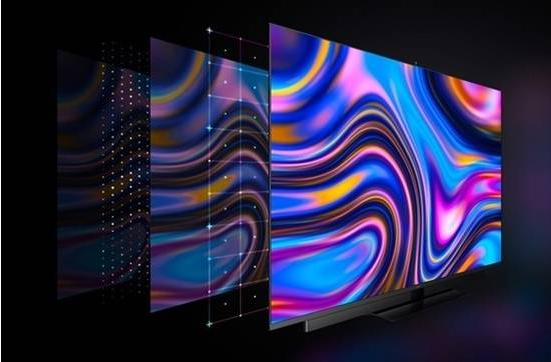
As display technology matures, consumers are increasingly focusing on multi-sensory integration experiences, especially audiovisual synchronization, in addition to higher resolution, color accuracy, and dynamic range. However, traditional methods require bulky external speakers or multiple speaker units, which not only increase volume but also create integration challenges in space-constrained areas (such as inside cars).

The POSTECH team's innovative solution involves embedding ultra-thin piezoelectric actuators in the OLED panel, replacing traditional bulky vibration units. These pixel-arranged piezoelectric elements can convert electrical signals into precise sound vibrations and perfectly fit the thin structure of OLED.
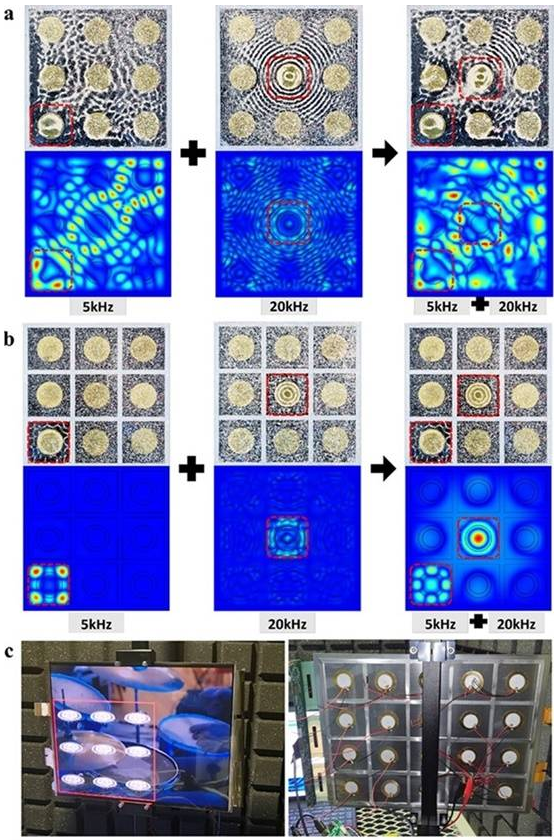
This solution addresses the long-standing industry issue of "sound crosstalk" by employing a unique technology to eliminate interference from adjacent sound sources, ensuring that the sound emitted from each pixel maintains spatial isolation, achieving unprecedented precise sound positioning.
This technology brings broad application prospects, such as enabling drivers to hear navigation instructions while passengers enjoy music with zoned sound effects inside the car. At the same time, it opens up new design possibilities for smartphones, laptops, and VR devices.
Professor Su Seok Choi stated: "Displays are evolving from mere visual output devices into complete sensory interfaces that combine audiovisual elements. This technology will become the core of the next generation of electronic devices, making various devices thinner and lighter while providing immersive high-fidelity sound effects."
Previous page
Related News
2025-12-31
2025-07-28
NO.7, Chuangyuan Rd, Jiaozhou Bay Comprehensive Bonded Zone, Hetao Sub-district, Chengyang District, Qingdao, Shandong Province, P.R.C.